I have heard
That guilty creatures sitting at a play
Have by the very cunning of the scene
Been struck so to the soul that presently
They have proclaim'd their malefactions;
For murder, though it have no tongue, will speak
With most miraculous organ.
I'll have these players here
Play something like the murder of my father
Before mine uncle: I'll observe his looks;
I'll tent him to the quick: if he but blench,
I know my course. The spirit that I have seen
May be the devil: and the devil hath power
To assume a pleasing shape; yea, and perhaps
Out of my melancholy and my weakness,
As he is very potent with such spirits,
Abuses me to damn me
I'll have grounds
More relative than this:
The play's the thing
Wherein I'll catch the conscience of the king.
[Applause]
[Music]
I think ... a truly normal amount about the relationship between theater and gaming. It all has to do with the word play. In both theater and in gaming, the person who performs a role within the confines and conventions of their medium is called a player.
Think of it this way. When an audience and the actors gather together in a dark theater, they're all agreeing to follow the rules of a certain game, a game called Let's Pretend. The actors play their roles and the audience imagines the world around them.
Compare that to the rules people agree on when they get together around a table and play in a game, or when it's done through a computer screen. To me, these are both special forms of media.
When you think of a novel, you likely think of a physical book. You've experienced it when you've read it from cover to cover. You share that experience by giving someone else the book. a painting, a sculpture. These are complete art objects. You can look at them for a long time and discover new things about them. But the basic experience isn't something that can change.
But even if you see a stage play, that doesn't mean you're seeing the same show I saw last week or the same show it was when it was a small production on an outdoor stage and the actors were still learning to play their roles. The script writer was still going back to the script. I also never experienced my first playthrough of an RPG because playing is always a performance and whatever you perform you interpret. You read the same lines from the same book as everyone else, but you decide what inflections to use, what to emphasize, how to move through the world. That's why even I will never see that same show again. There are stories whose experience changes in the telling. Like the proverbial stream no one steps in twice.
I knew it. You just want to go where you've been. But you never can. I never can. We're stuck here in the future. Together. At least we can do it together. The hidden joys, the little secrets. There's only one thing I need to know. One thing I have to know, then I can be all right. You're having fun, aren't you?
So, here's a story I've been thinking about a lot lately.
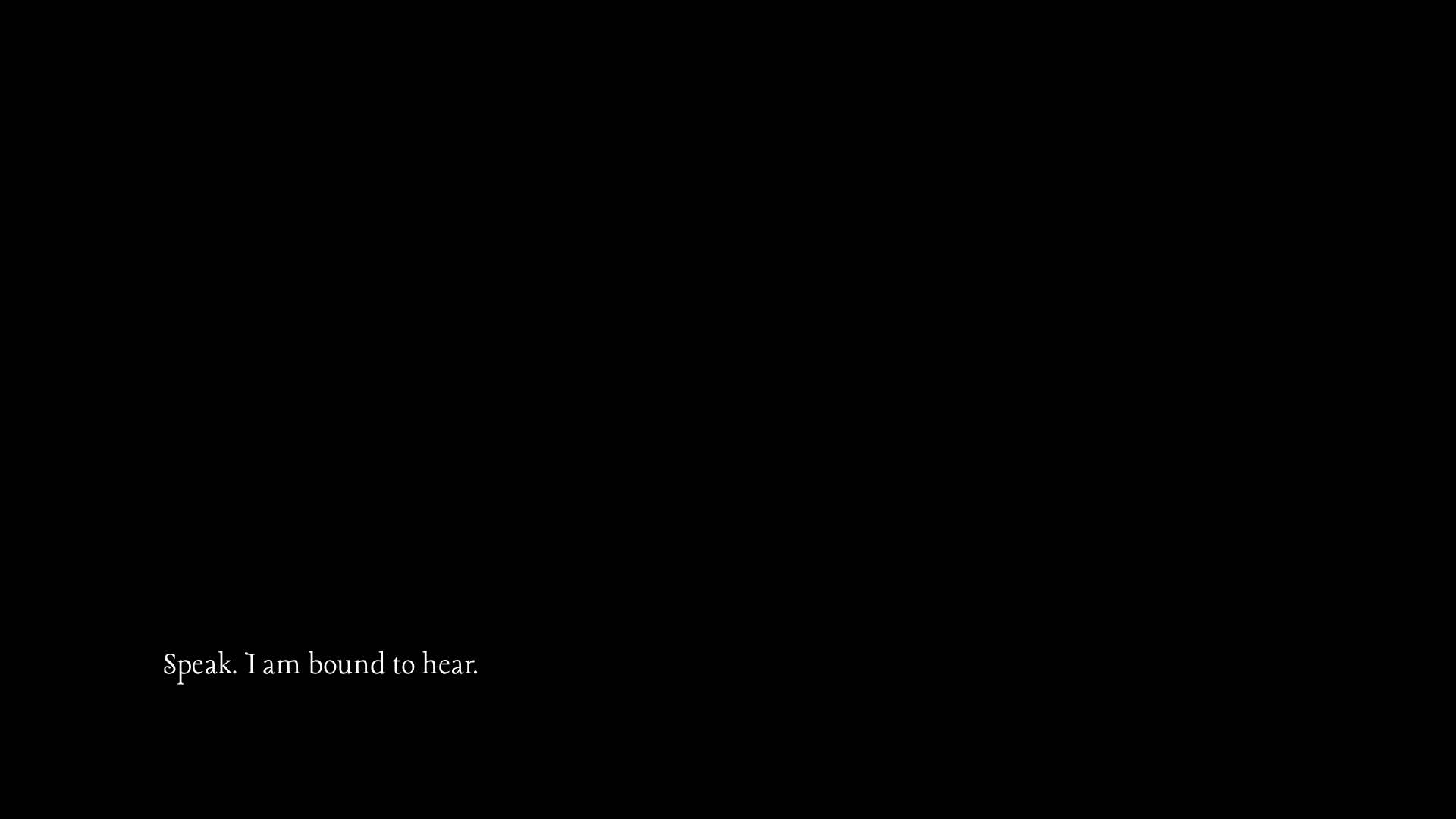
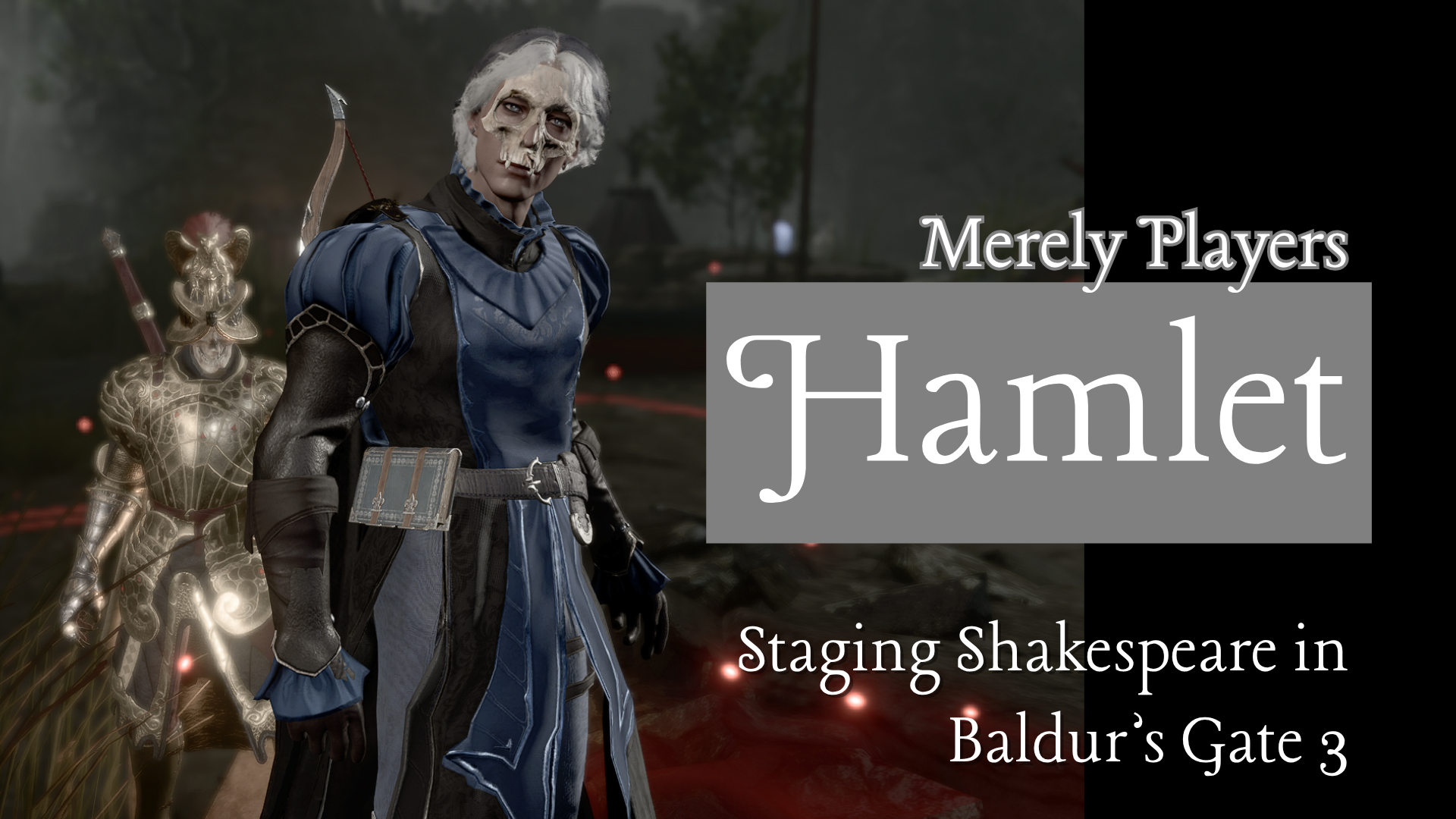
Hello, and welcome to what I hope will be the first episode of Merely Players, a series where I share some of my interpretations of characters from the works of William Shakespeare. The twist being that instead of playing out these interpretations on stage, I'm playing them out in the equally critically acclaimed Balders's Gate 3. This is actually a longtime hobby of mine. I love role playing games. I love pen and paper games. I love to play by post games. I love computer games. And I love a character creator. I can spend hours in the character creator looking into the eyes of my character to be obsessing over nose tip size. Yes, I'm looking at you, Dragon Age 2.
When creating a character for an RPG, I like to take the chance to reinterpret a character I already know. Whether it's a beloved OC of mine or from another work of fiction, it gives me a template to work from. Will I be playing someone choleric and hot-tempered, ponderous and melancholic? It helps me make the decisions that come up in gameplay, but it also gives me chance to consider choices those characters never had in their canon and develop them further.
In his original canon, Hamlet is the young prince of Denmark. His youthfulness is emphasized throughout the play. So is his princeliness for one particular reason. His father died, but Denmark is an electoral monarchy. Roughly speaking, the next king is decided upon by a council of nobles. And instead of electing young prince Hamlet, they voted in Hamlet's older and more experienced uncle Claudius was no doubt helped by marrying the former queen, Hamlet's mother. Hamlet hates all of this, but there's nothing for him to do about it. Not until he hears a rumor from an old friend in a few of the soldiers that the ghost of his father has been spotted walking late at night.
HAMLET
Ay, madam, it is common.
QUEEN GERTRUDE
If it be, why seems it so particular with thee?
HAMLET
Seems, madam! nay it is; I know not 'seems.'
'Tis not alone my inky cloak, good mother,
Nor customary suits of solemn black,
Nor windy suspiration of forced breath,
No, nor the fruitful river in the eye,
Nor the dejected 'havior of the visage,
Together with all forms, moods, shapes of grief,
That can denote me truly: these indeed seem,
For they are actions that a man might play:
But I have that within which passeth show;
These but the trappings and the suits of woe.
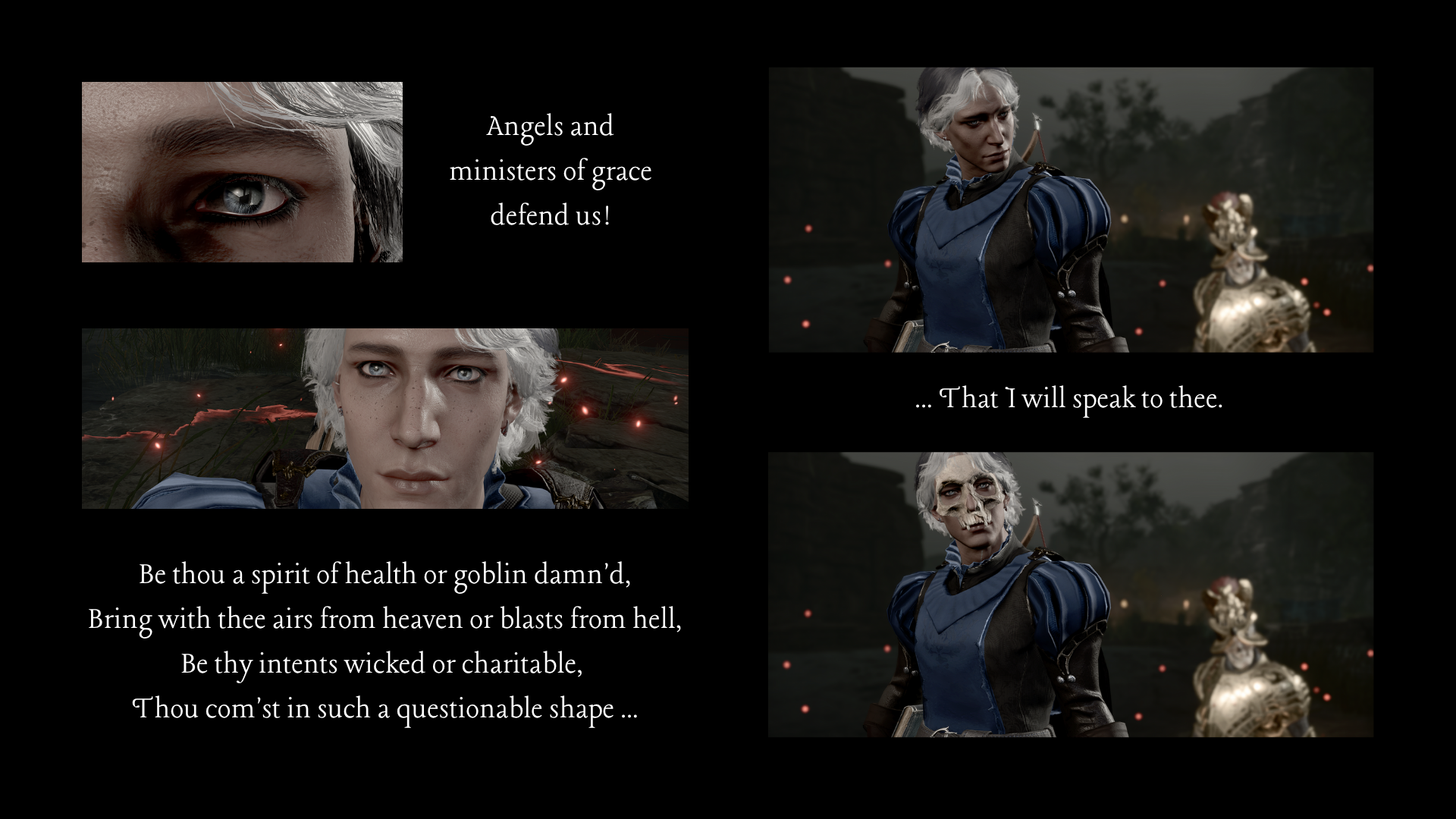
Time to look at my prince's beautiful face. I want to talk here about some of the choices I made while interpreting him. He's a blend of Hamlets from productions I've seen, and also the Hamlet that I picture in my head when I'm reading the play to myself, or when I'm reciting monologues ... because sometimes, you know, you just get real in your feelings and all you can do is recite, "O what a rogue and peasant slave am I," until you feel better. That's something I did when putting this video together.
So, the blue blue eyes with a heavy eyeliner -- that's based on Campbell Scott. It's what he wears for the play scene. It shows he's getting into the spirit of things. He's experimenting with stage makeup, playing with his identity. Because at heart, Hamlet is really just a theater kid, and that's something theater kids do. Hamlet is also someone who thinks a great deal about how he presents himself to the world, and he thinks about the many senses of playing. You see this when he's arguing with his mother:
These indeed seem,
For they are actions that a man might play.
And you see this in the 'what a rogue and peasant slave am I' soliloquy where he witnessed a player's ability to tap into a place of raw feeling, even though the thing that inspires that feeling is a mere fiction. Something I think that all of us here can understand. It's also something that he envies. It's something he wishes he could do more of in his life.
Tears in his eyes, distraction in aspect, A broken voice, and his whole function suiting
With forms to his conceit? and all for nothing!
What would he do had he the motive and the cue for passion that I have?
The shade, by the way, is elf blue. Those come from Hamlet's for mother. I decided Gertrude is a full elf, which is part of why she can accept death so easily. She was always going to outlive her husband. She had a chance to prepare her heart for that to happen. And that's something hard for her son, who's closer to human and lives on a more human timeline as a half- elf to understand. She still fusses over her son. She's still too all aware of how fragile and mortal he is. And that's something I see both in the play and that I think would be interesting to expand on in a fantastical world like this.
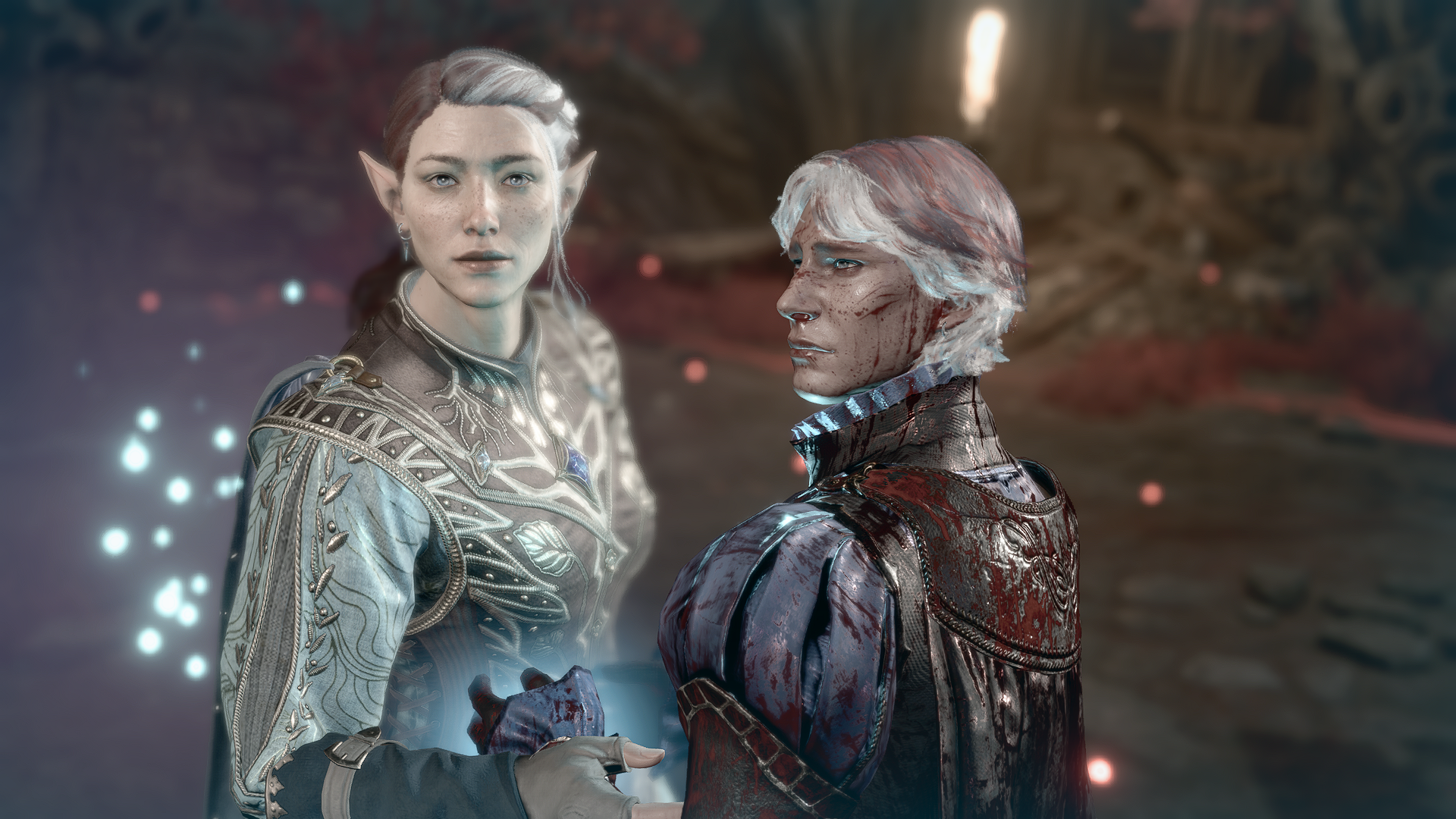
Now that I've read all of that into my choice of eye color, I also want to point out the hair. It's black, it's white. In the play, Hamlet's father is said to have a sabled silver, black and white, salt and pepper. Um, and I like to think that this is a familial kind of trait that Hamlet has inherited, but I chose the maudlin pixie cut because you see those distinct layers of white and black. It gives him this ... I'd say it's like a 90s scene kid, dabbling with hair dye in the bathtub kind of vibe. Starting out with the brightest, most bleached of bangs, all while listening to My Chemical Romance. The freckles I added because they were cute.
As for his actual fit, I'm going to put some links in the description of the different mods I used. I did go for a look that was brooding, melancholy, princelike, and that I think played with that Elizabethan style, there with the slash sleeves and the ruff around the neck.
>Suit the action to the word, the word to the action with this special observance: o'erstep not the modesty of nature: for any thing so overdone is from the purpose of playing, whose end, both at the first and now, was and is, to hold as'twere the mirror up to nature: to show virtue her own feature, scorn her own image, and the very age and body of the time his form and pressure.
Now that's all on the surface, and what a beautiful surface it is, but I wanted to talk a little more about the story about the mechanics. Whenever you ask someone about their DnD character -- the first thing that you should do when someone tells you that they play Dungeons and Dragons -- usually what comes first is their race, their background, and then their class. A fighter will fight things head-on. A rogue will sneak and steal. A bard will charm and entertain.
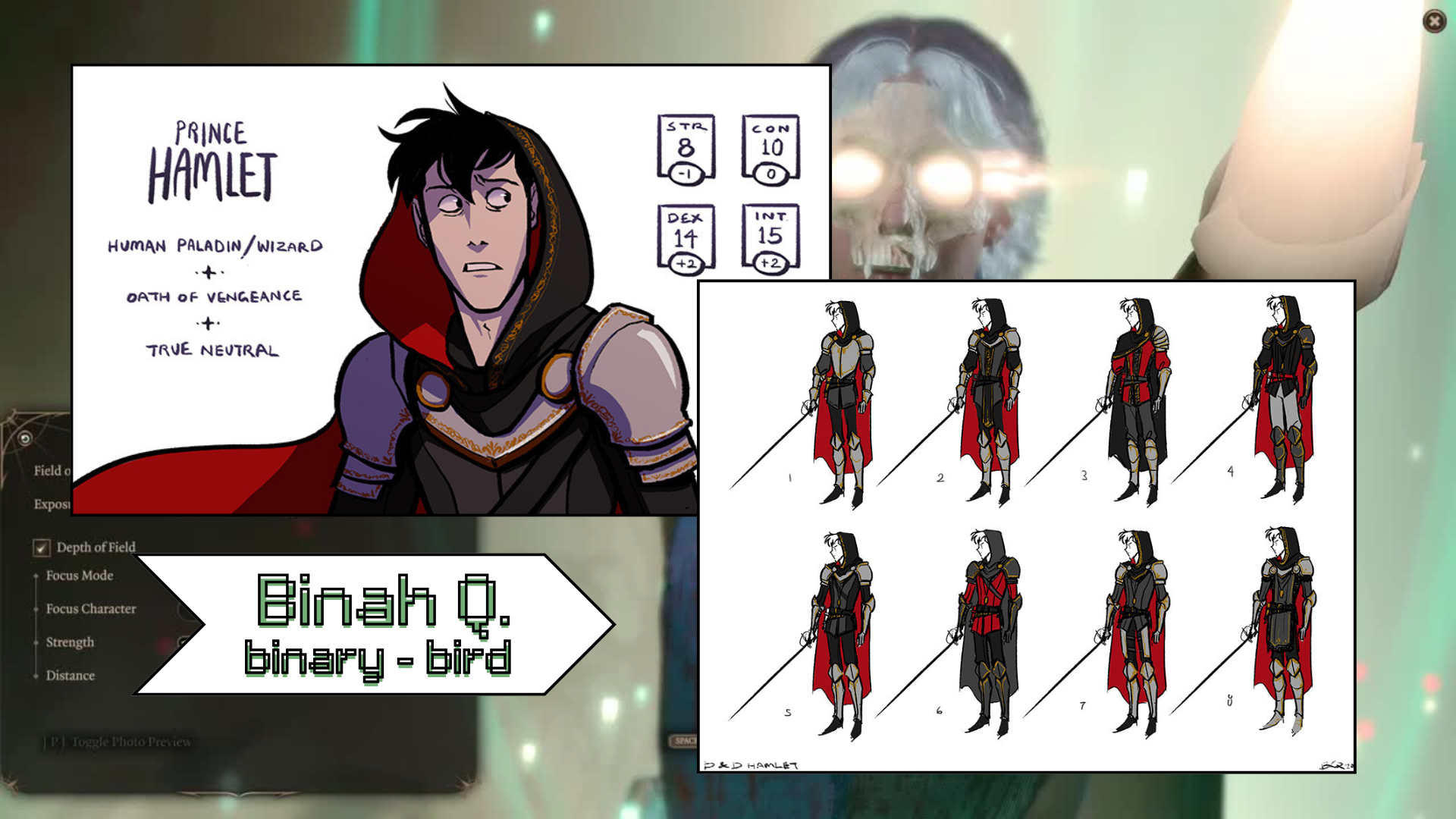
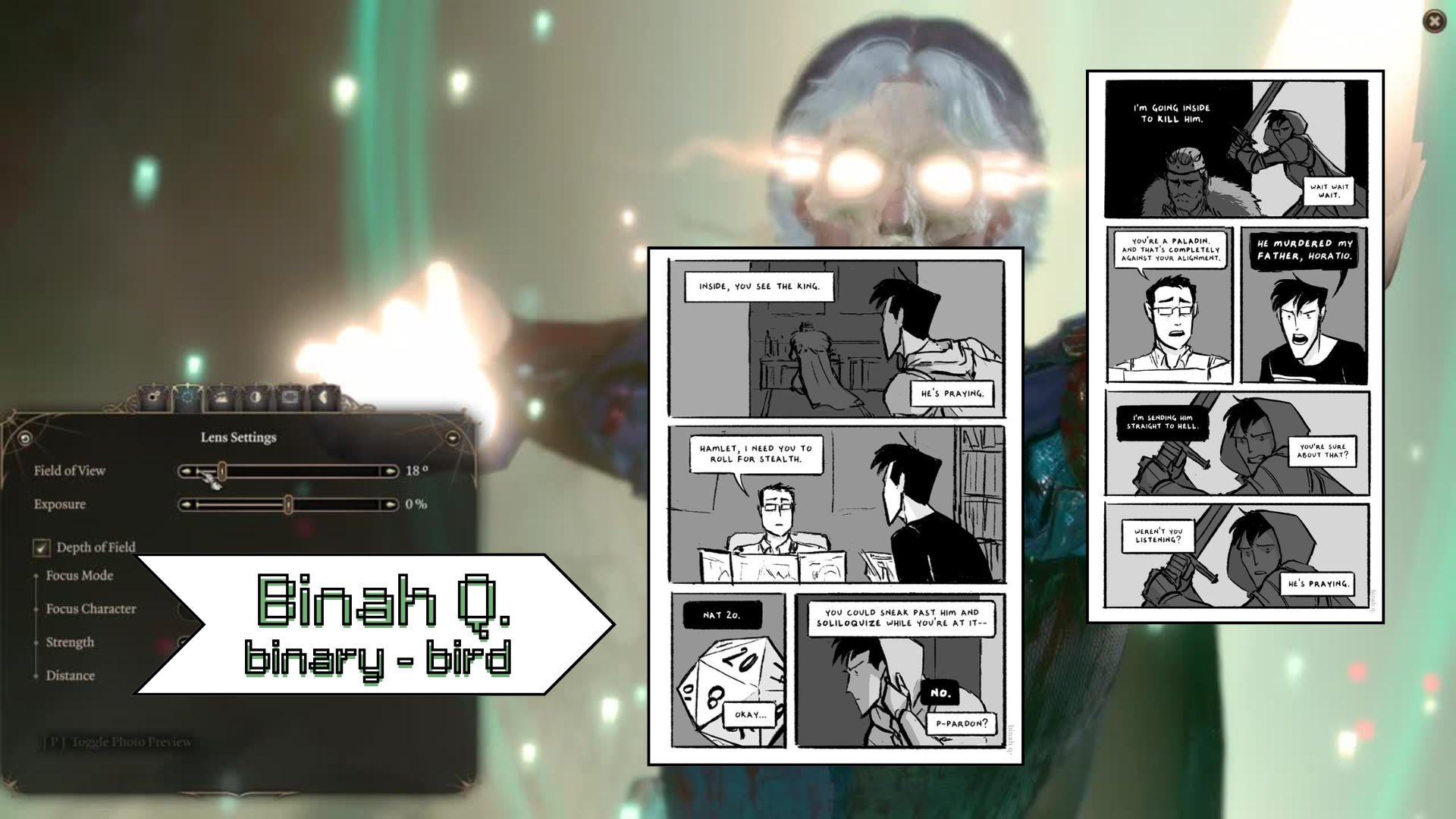
Now, I think Hamlet would be a great bard. I've written him as a bard in the past, because I think bards are truly terrifying when you think about them. But for this game, I made him a warlock. He could have also been a great vengeance paladin. There is a Tumblr artist, Binary Bird, who has a great depiction of a paladin Hamlet in a campaign run by Horatio.
Because after speaking to his father's ghost, Hamlet discovers how his father truly died. His father was poisoned by Hamlet's uncle in the garden as he slept. He died without being able to repent for his sins. So his soul is trapped in purgatory, burning away, only walking the earth at night. It's in this state that he comes to Hamlet and he commands Hamlet to swear an oath to him and take vengeance.
If thou didst ever thy dear father love --
HAMLET
O God! GHOST
Revenge his foul and most unnatural murder.
HAMLET
Murder!
GHOST
Murder most foul, as in the best it is;
But this most foul, strange and unnatural.
HAMLET
Haste me to know't, that I, with wings as swift
As meditation or the thoughts of love,
May sweep to my revenge.
GHOST
I find thee apt ...
... which you'll agree does make quite a bit of sense for a vengeance paladin. Mechanically, that's how paladins work. They follow some sort of oath that gives them the power to cast Divine Smites or to heal with Lay On Hands. And if they break that oath, they lose those powers.
In the way that paladins are empowered by their oath, a warlock is empowered by a pact. An oath, I think, is an impartial code of conduct. It's something that every paladin of that type follows. A pact, however, is a deal. A pact is often a debt. A pact is personal and it matters who you make it with and what you give away.
Oil burns in the fires of Avernus. The lightning storms of Dis strike his flesh. His soul passes through each layer of the hells, gaining their essence and their torment.
Hamlet's patron is a Great Old One. Now, the great old ones are very Lovecraftian. They're also an interesting addition to the world of the Forgotten Realms. Here we have these elaborate interplanar systems. We know all of these things about the gods, all of these things about the afterlife and the soul. These are the questions that Hamlet struggles with in the play where, even after seeing the spiriT, he still thinks of death as an undiscovered country ...
... from whose bourn No traveller returns, puzzles the will And makes us rather bear those ills we have Than fly to others that we know not of? Thus conscience does make cowards of us all.
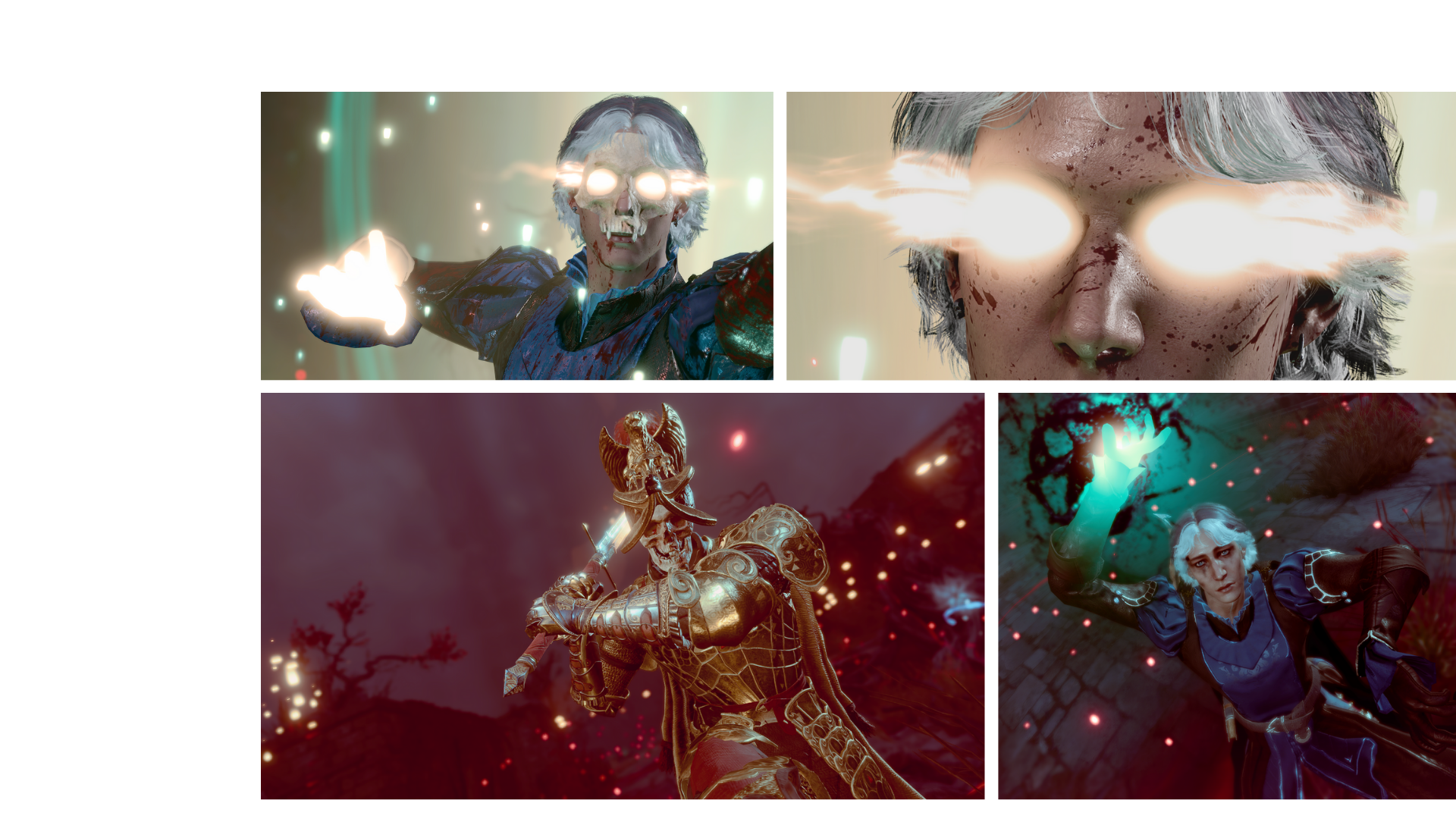
But there are stil unknowable things out there. There are still countries undiscovered. Great old ones dwell in that space. It's one place that you can't understand because what it is is a place of madness. Now, this does have some benefits. Being a warlock of a great old one gives you access to more psychic and enchantment spells ... because great old ones have a way of getting into other people's heads. In the play, soon after seeing his father's ghosts, Hamlet decides to put on what he calls an antic disposition.
Once more remove, good friend.
HORATIO
O day and night, but this is wondrous strange!
HAMLET
And therefore as a stranger give it welcome.
There are more things in heaven and earth, Horatio,
Than are dreamt of in your philosophy. But come;
Here, as before, never, so help you mercy,
How strange or odd soe'er I bear myself,
As I perchance hereafter shall think meet
To put an antic disposition on,
That you, at such times seeing me, never shall,
With arms encumber'd thus, or this headshake,
Or by pronouncing of some doubtful phrase,
As 'Well, well, we know,' or 'We could, an if we would,'
Or such ambiguous giving out, to note
That you know aught of me: this do swear
So grace and mercy at your most need help you, Swear.
GHOST
Swear.
HAMLET
Rest, rest, perturbed spirit!
HORATIO
I swear, my lord, by heaven.
For his imagined arc in Balders's Gate 3, I imagine Hamlet starts out like another origin character. Holes in his memory, the whispers of his father in his head, unsure whether he's losing his mind or whether that's something already gone.
Your head whispers vengeance. You cannot wait to slice your way forth, seeking whatever wrought this tragedy upon you.
I must discover who I was and what happened to me ... before my twitching knife hand writes a tragedy in blood.
Going back to the mechanics, Hamlet's also a booklock. Now, what's that?
That means he received a boon from his patron. And that boon is called a book of shadows. It allows Hamlet to learn other cantrips. In this case, it allows him to learn vicious mockery, which I believe is a must have for Hamlets. He uses his wit. He uses his language to deliver these laced double meanings while pretending to be mad. So, I think that idea of vicious mockery, lacing enchantments into your words, fits Hamlet to a tee.
At higher levels, he also learns the spells Haste, he learns Call Lightning ... and Animate Dead. Do you see where I'm going with this?
The narrative of a warlock ... To me, it's making a dubious pack for power. By compacting with a great old one, Hamlet has taken on the risk of madness in exchange for the power to bring back the dead. Horatio presents Hamlet with this exact dilemma in the play:
It will not speak; then I will follow it.
HORATIO
Do not, my lord.
HAMLET
Why, what should be the fear?
I do not set my life in a pin's fee;
And for my soul, what can it do to that,
Being a thing immortal as itself?
It waves me forth again ... Go on.
I'll follow thee.
HORATIO
What if it tempt you toward the flood, my lord,
Or to the dreadful summit of the cliff
That beetles o'er his base into the sea,
And there assume some other horrible form,
which might deprive your sovereignty of reason
And draw you into madness?
HAMLET
Still I am called ...
Hamlet takes that risk because that's what he'll do to see his father again. I don't think Hamlet had to be an avenger. I don't think the Oath of Vengeance is what drives him. I think it's this personal relationship, this personal pact, and this personal loss that defines him.
O all you host of heaven! O earth! what else?
And shall I couple hell? O, fie!
Hold, hold, my heart;
And you, my sinews, grow not instant old,
But bear me stiffly up. Remember thee!
Ay, thou poor ghost, while memory holds a seat
In this distracted globe. Remember thee!
Yea, from the table of my memory
I'll wipe away all trivial fond records,
All saws of books, all forms, all pressures past,
That youth and observation copied there;
And thy commandment all alone shall live
Within the book and volume of my brain,
Unmix'd with baser matter: yes, by heaven!
O most pernicious woman!
O villain, villain, smiling, damned villain!
My tables,--meet it is I set it down,
That one may smile, and smile, and be a villain;
At least I'm sure it may be so in Denmark:
So, uncle, there you are.
Now, to my word.
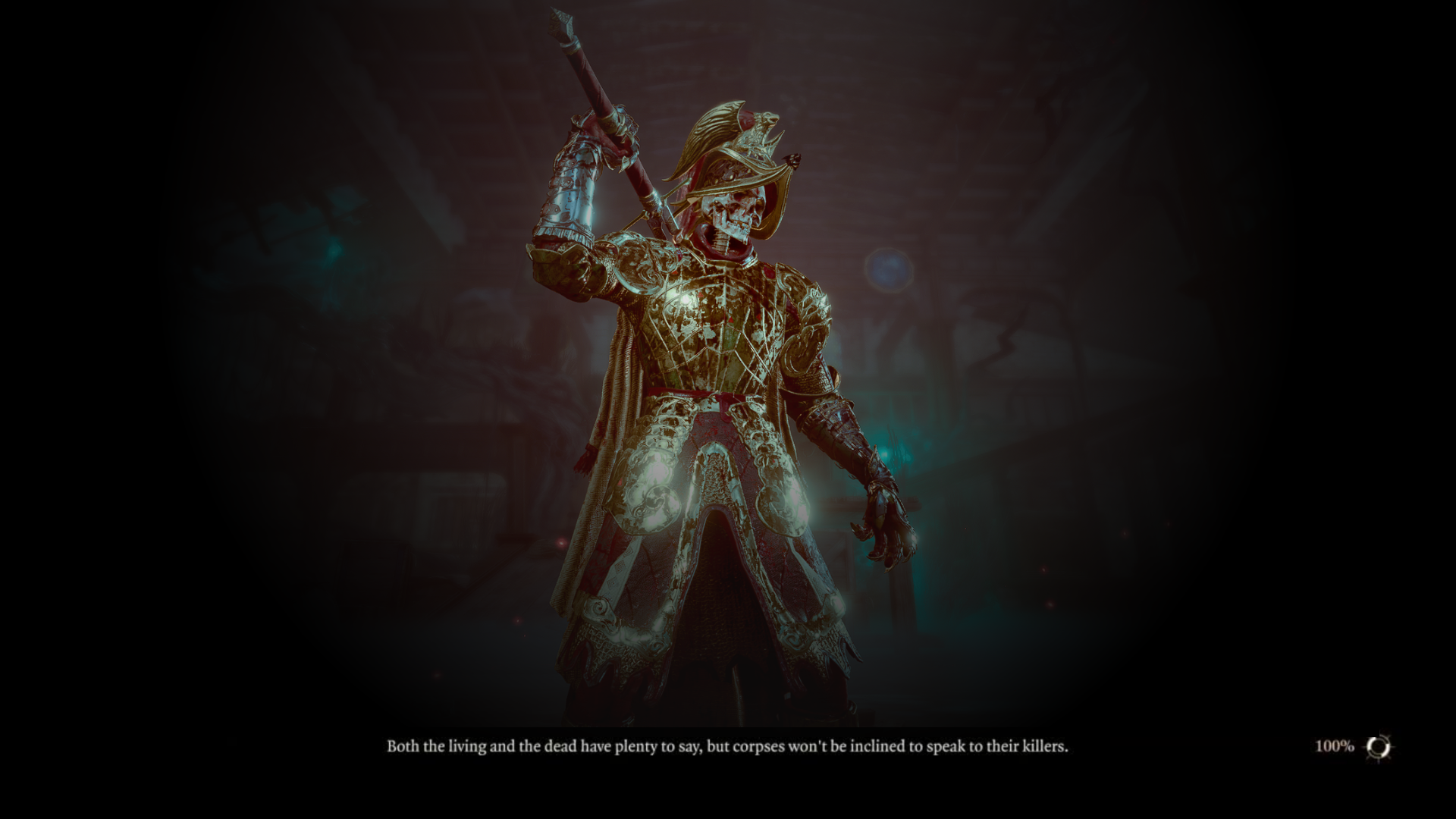
So, I couldn't finish this essay without saying a little bit more about King Hamlet's design. Spirit or demon? That's the question that keeps getting asked in canon. So, I wanted for him to have a heroic but potentially questionable look. One that invokes the ambiguity expressed by Hamlet when he first sees the ghost, and later on, when he's plotting that play within the play.
The spirit that I have seen
May be the devil: and the devil hath power
To assume a pleasing shape
So for King Hamlet, it's a kind of knight- in-shining-armor look. You see the armor that I gave him, almost ostentatiously gold, and beneath the gold plating there are flickers of red and black. These are colors associated in the forgotten realms with Asmodeus, and other devils who come from the hell planes. He could be a righteous knight or a knight of hell. But either way, the image is commanding, military. Hamlet was born on the same day that King Hamlet defeated King Formbra in single combat. So the image of King Hamlet returning victoriously from battle is the first image Hamlet likely ever had of him.
It may indeed have been his last.
In the play, the spirit is also said to appear in armor, which Hamlet takes as a sign that all is not well. It's a sign that he's preparing for battle. This is a spirit of violence and vengeance. Whether it's King Hamlet in truth, or something else pretending to be him ... This is its only purpose: to make war. And that's also why I think the flaming hellfire sword really pulls it all together.

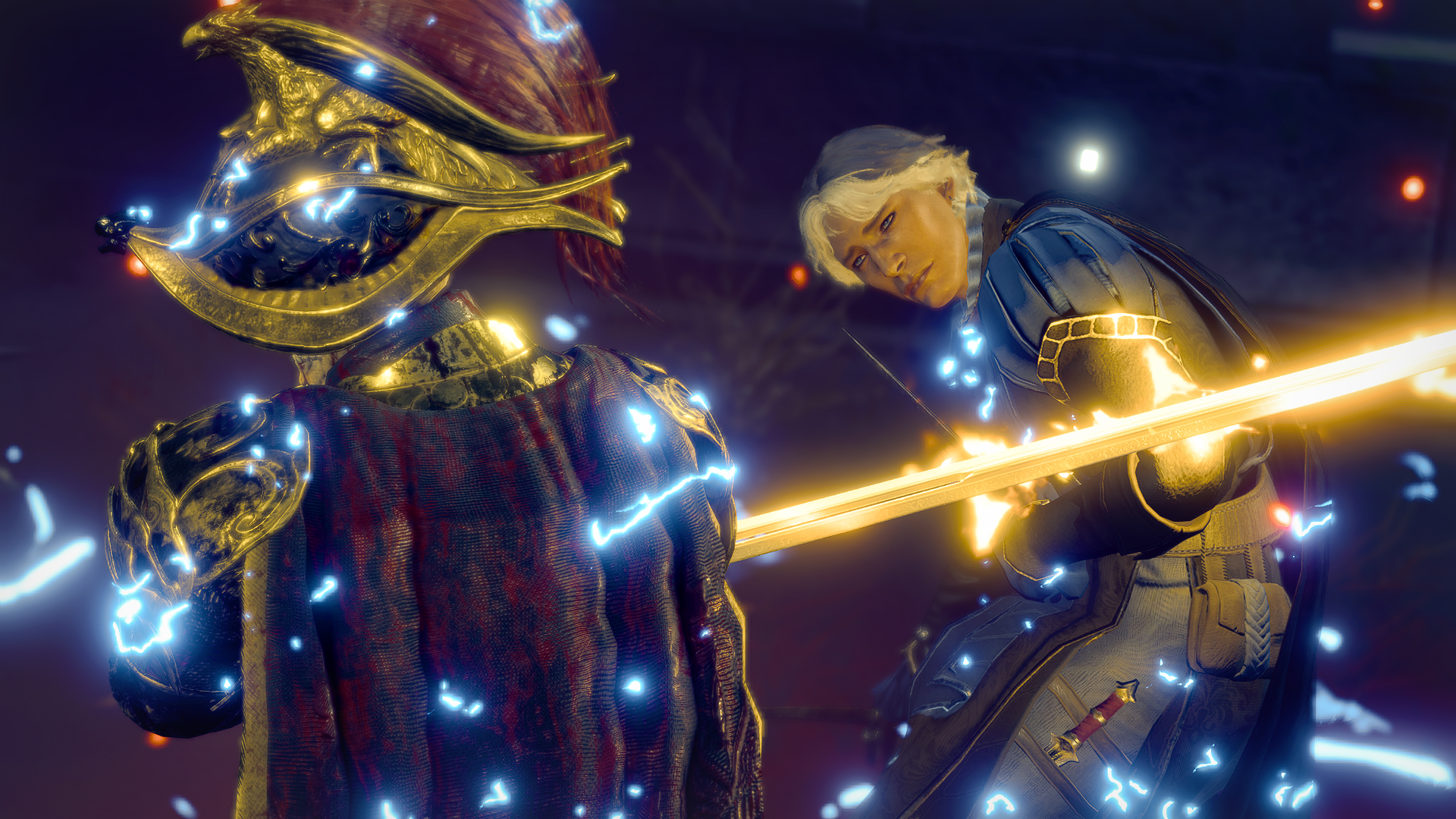
Now, um, you might notice, or you might not, that King Hamlet is a skeleton, not a ghost. If you don't spend a lot of time in monster manuals like I do, one undead likely looks like any other. Hamlet's design was inspired by the figure of the Death Knight. That's one of those undead found in one of those many monster manuals. A death knight is a former paladin, one who's fallen from grace and died before they had a chance to atone.
(And yes, it was the process of making this video that made me realize something that had been staring me right in the face in the middle of camp.)
But it also goes with the themes originally present in King Hamlet's Purgatory.Those themes of religion, atonement, and sin were equally important to me when interpreting another character, the smiling villain himself, King Claudius.

But that's another video, one I hope to edit soon. It took me a couple of weeks to put together this one, but that's because I'm learning as I go. This is my first time doing a video like this, and if you've watched so far, I hope you enjoyed it. Please let me know what you liked and what you want to see more of. Would you like to see other characters from other plays? Would you like to see more gameplay or some more of the lore I've built? Would you like to see some of the mods I'm working on and oh, I need so much help with? Let me know if there's anything I can do to improve.
Every part of this process has been brand new, but especially the recording. My local library has a recording studio and I'm very grateful for that. But to be honest, the mic is pretty intimidating. I feel like I don't know where to put the pop filter and I feel like I still hear the pops. Uh, but if you're still listening and and if you're able and only if you are able, I would be so grateful if you could send me a few dollars on Kofi. Just something to cover bus passes and tea on my way to the library to make more of these.
And of course, I just deeply appreciate you watching this and being a part of it because a performance needs an audience. And this is my excuse to think about performance. This is my excuse to talk about play. The exciting thing about play is the exploration. It's the learning and it's doing it together. So, thank you again and just have the best day.
Thank the gods. Thank gods. We did it. We've done it, everyone! Yes!