
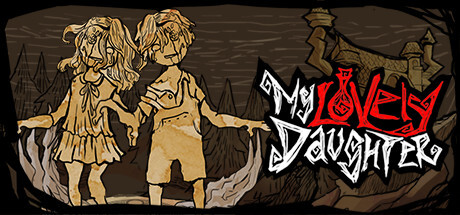
How I found this game: I found this game through a well-timed sale. (As of July 3, 2026, it's on sale again, for $2.99!) More broadly speaking, I found this game because I'm obsessed with daughter-raising sims. I wishlisted My Lovely Daughter after playing Mushroom Musume and falling fully back in love with the genre.
The video ActionButton Reviews Tokimeki Memorial breaks down how dating sims objectify love (and that's a good thing). Daughter-raising sims, I'd argue, objectify childhood and girlhood. As former gifted child ™ who fears she didn't fully optimize her youth, I find the process of objectification fascinating.
How this game made me feel: There's a deliberate tension between how the game makes you feel, and how the gameplay makes you think. It's a resource management game as much as it's a raising sim, and the resources are the daughters you raise: homunculi made of meat and clay, wood and metal, whatever you can get your hands on. Meanwhile your flesh-and-blood daughter, the daughter who died, waits on the bed to be revived. You send your homunculi out into the world, get them work to gain experience, watch them grow level by level, then sacrifice them to the soul furnace.
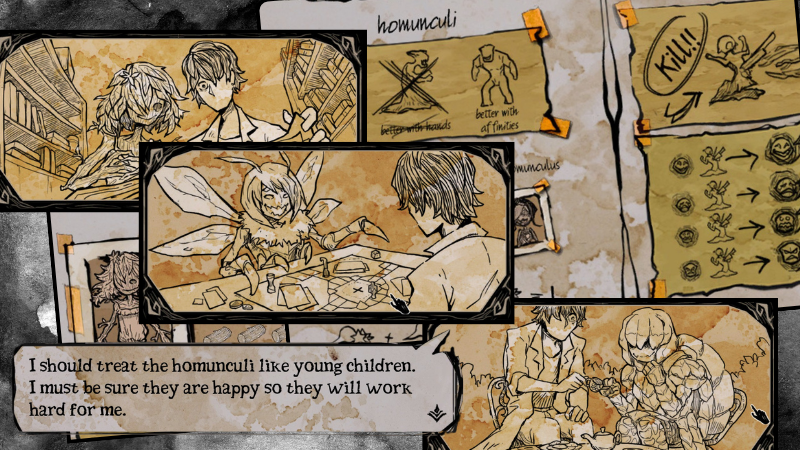
But the game still forces you to name each homunculus, encouraging you to get attached. You spend time with your homunculi as they grow -- you have to, so they don't refuse to work -- and you're presented with quaint, frolicking illustrations and the sound of childish laughter. If the game wanted to desensitive you to their deaths, it wouldn't work so hard to endear you first.
When you sacrifice a homunculus, it's with the sound of the scream. The same scream every time, but the manner of death is personal, and more pathetic because of it. You chop your wooden daughter to brutal, efficient pieces, turning her to firewood. You let your mud daugher, who always disgusted you, melt away in the rain. You electrocute your worst mistakes like state prisoners, for the crime of merely existing.
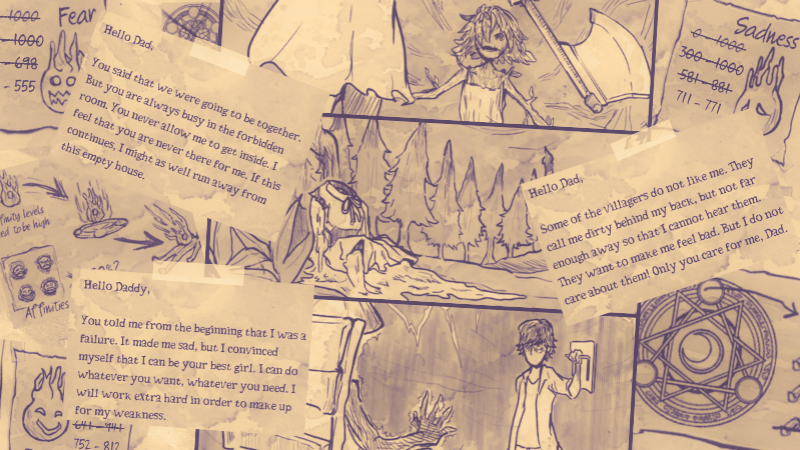
But it's obvious that your creations are thinking, feeling children who look up to you like a father, whether or not they 'came out wrong.' They whisper together, they leave letters in the hall, they expess their wishes and fears to you.
And you exploit them, anyway.
Child labor and exploitation isn't exactly new to daughter-raising sims, but here it's unignorable. It's a reality, even off screen, one worth looking at directly. Reduced to the resources they cost and accrue, children grow up thinking they're burdens, when the point of creating a life should be simply to let it live.
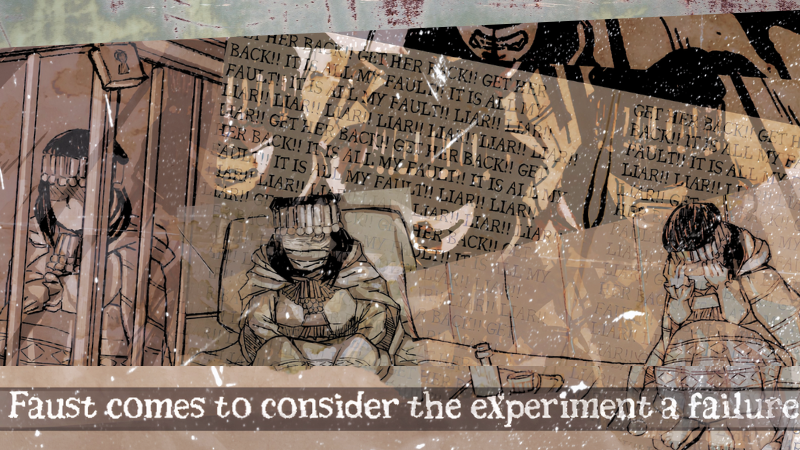
Your experiments in bringing your daughter back inevitably become experiments in controlling your daugher's emotions. Each soul infusion the player character considers a failure still resulted in a real, living girl. But she was too angry, too sad, too manically happy, too scared, as if you'd done something wrong. You keep trying to remake your daughter in your image, even if makes her hate you -- even if you hate her for being you -- and if that's not a metaphor for intergenerational conflict and cycles of abuse, I don't know know what is.